
The Eight Scales of Cultivating Safe Spaces EcoSystem
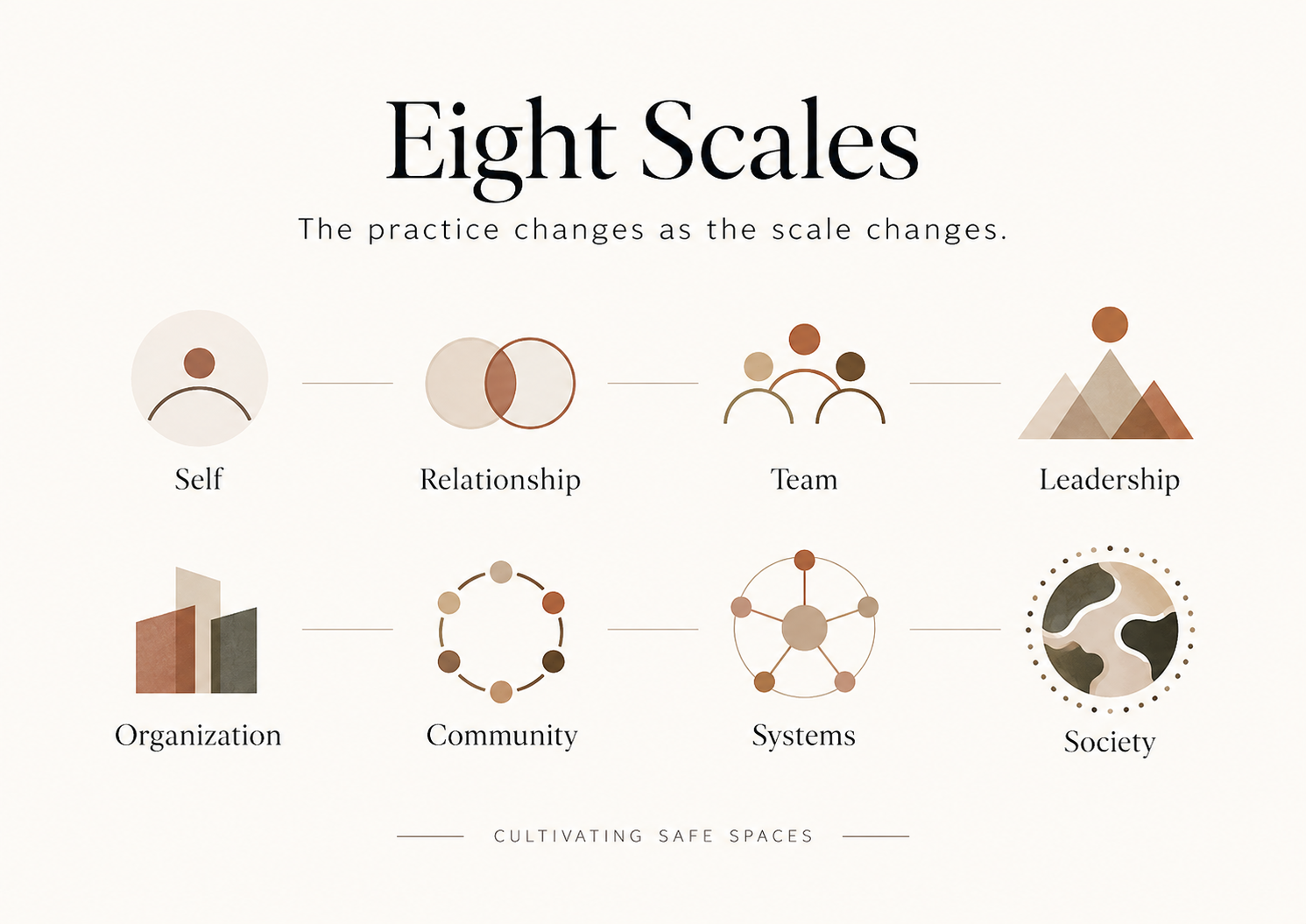
The practice changes as the scale changes.
Cultivating Safe Spaces works across eight connected scales:
Self → Relationship → Team → Leadership → Organization → Community → Systems → Society
The scales describe increasing levels of complexity. What begins as self-awareness and relationship can grow into team capacity, leadership, organizational conditions, community decision-making, systems coordination and societal change.
Scale 1 - Self
This is the practice of understanding what is happening within us and taking responsibility for how we show up.
The work may include:
self-awareness
emotional regulation
triggers and patterns
intentional choices
personal responsibility
At this scale:
I am learning to notice myself, regulate my responses and make more intentional choices.
Ways to work at this scale:
Intro to Cultivating Safe Spaces
Learn the core CSS framework and begin applying it to how you understand yourself, your responses and your relationships.
Public Learning Sessions
Join a live workshop, webinar or professional development session focused on practical CSS learning.
View Upcoming Learning Opportunities
3-Hour CSS Workshop
A focused workshop for organizations, teams and groups that want to build shared language and practical capacity around one primary topic.
Explore the 3-Hour CSS Workshop
Full-Day CSS Workshop
A deeper learning experience with more time for reflection, discussion, practice and application.
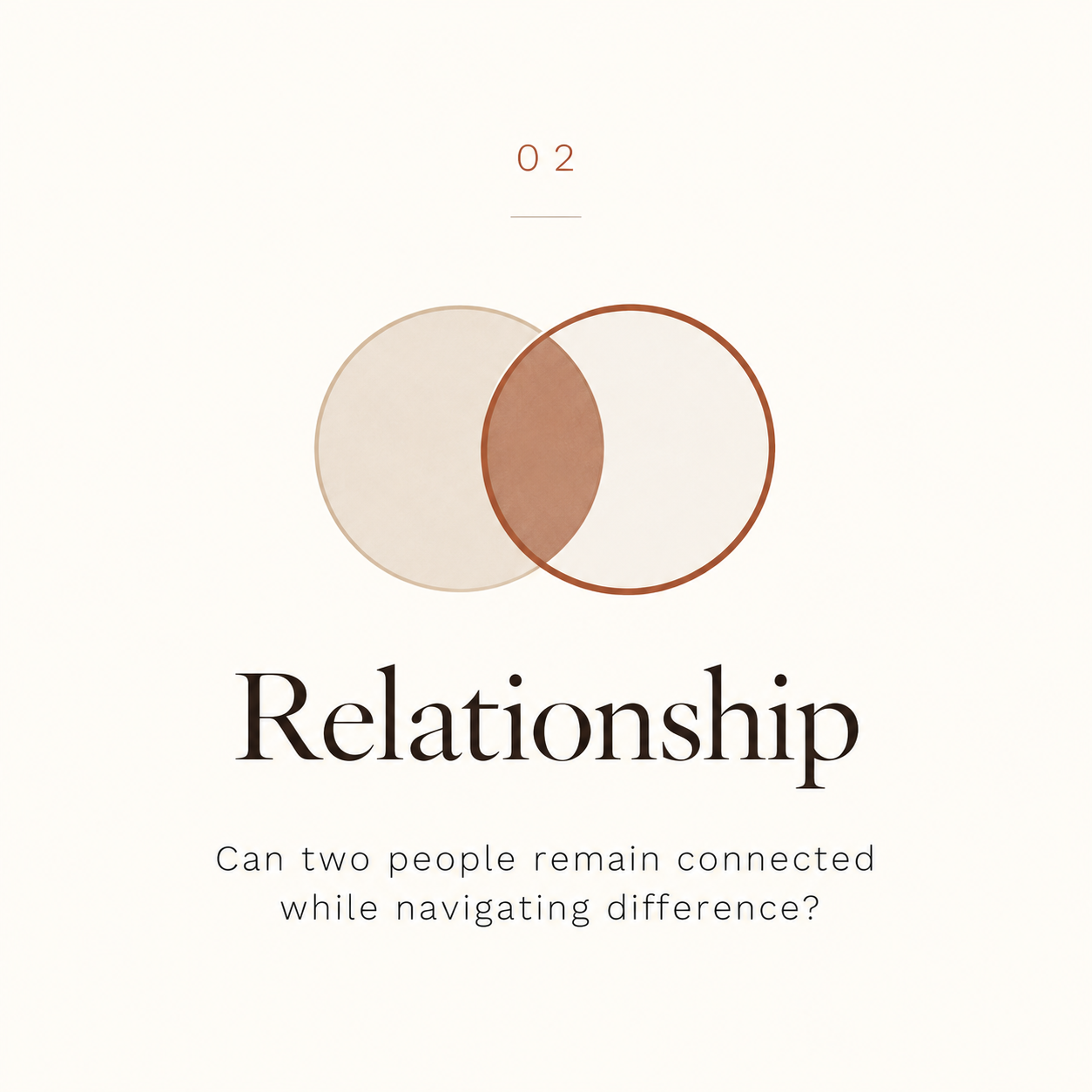
Relationship
Can two people remain connected while navigating difference?
Relationships become difficult when there is disagreement, hurt, pressure, misunderstanding or competing needs.
The work may include:
communication
trust and safety
boundaries
conflict and repair
accountability
At this scale:
We are learning how to stay connected without avoiding difference.
Ways to work at this scale:
Intro to CSS, Public Learning Sessions, 3-hour CSS training, Full-day CSS training, Working + Scoping Session.
Team
Can we think together?
A group of capable people does not automatically become a capable team.
The work may include:
shared purpose
team dynamics
productive conflict
decision-making
inclusion
At this scale:
We are building the capacity to think, decide and work together.
Ways to work at this scale:
Full-day CSS training, private team learning, Working + Scoping Session, customized team working sessions.
Leadership
Can leaders cultivate the conditions where people thrive?
Leadership is not only about making decisions.
It is also about the conditions those decisions create for everyone else.
The work may include:
leadership under pressure
decision-making
accountability
use of power
governance relationships
At this scale:
We are looking at how leadership behaviour, decisions and use of power shape the people and systems around them.
Ways to work at this scale:
Private CSS workshops, Executive + Leadership Working Sessions, Working + Scoping Sessions, leadership advisory.
Organization
What behaviours is the organization producing?
Sometimes the problem is not one difficult person.
Sometimes people are responding exactly as the structure encourages them to.
The work may include:
roles and responsibilities
decision systems
policies and practices
communication flow
meeting structures
accountability structures
At this scale:
We look beyond individual behaviour and examine the conditions the organization itself is creating.
Ways to work at this scale:
Organization-wide alignment, custom curriculum development, Working + Scoping Sessions, Working Engagements, strategic advisory.
Community
Can communities remain connected through complexity?
Community work carries history, relationships, responsibility, identity and often competing perspectives about what should happen next.
The work may include:
relationships and history
participation
collective decision-making
conflict and repair
shared responsibility
At this scale:
The work is about maintaining relationship and collective capacity while navigating complexity together.
Ways to work at this scale:
Community-wide CSS learning, Working + Scoping Sessions, Community + Nation Working Engagements, longer Working Engagements, Systems Advisory where multiple parties are involved.
Systems
Can multiple organizations, governments and Nations work together?
Some challenges exist between organizations rather than inside one.
No single institution has the authority, knowledge or capacity to solve them alone.
The work may include:
system dynamics
cross-sector alignment
root causes
governance structures
shared strategies
At this scale:
We are working across boundaries and asking what needs to change in the relationships, structures and systems connecting multiple parties.
Ways to work at this scale:
Working + Scoping Sessions, Systems Strategy + Institutional Change, multi-party working engagements, Systems Advisory.
Society
How do humans continue adapting together as complexity increases?
This is the broadest scale.
The work moves into long-term structural and societal questions where policy, institutions, economies and public systems interact.
The work may include:
public policy
societal change
economic systems
institutional transformation
long-term impact
At this scale:
We are asking what needs to change at the level of institutions, systems and society itself.
Ways to work at this scale:
Working + Scoping Sessions, Systems + Societal Strategy, Systems Advisory, long-term institutional and cross-sector work.