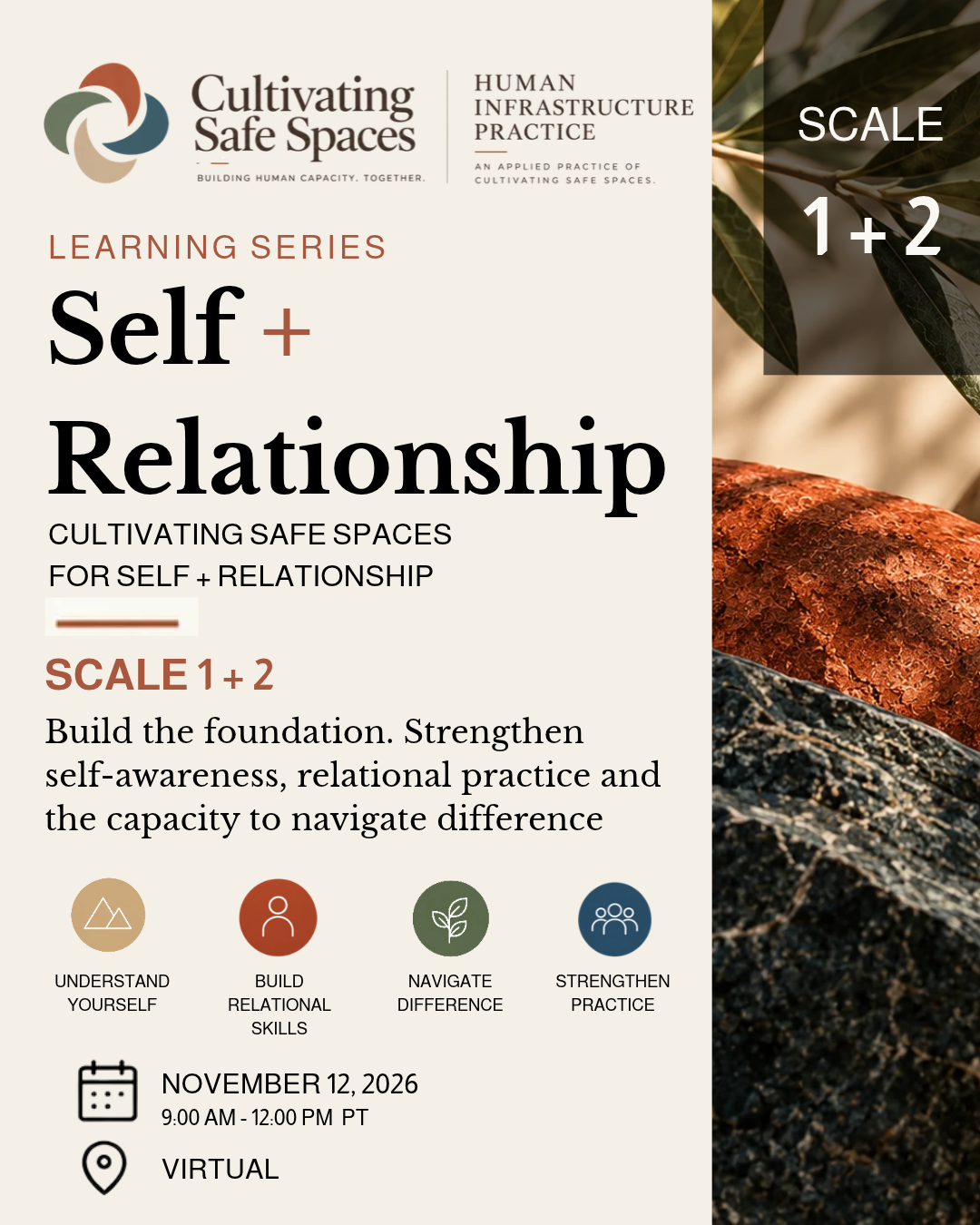
Cultivating Safe Spaces begins with how we show up and how we relate to one another.
This foundational session explores the Self and Relationship scales of CSS. Participants will strengthen self-awareness, understand what affects their capacity under pressure, and explore practical ways to communicate, navigate difference, build trust and remain accountable in relationship with others.
the foundational Cultivating Safe Spaces framework
self-awareness and personal responsibility
capacity, patterns and responses under pressure
communication, trust and boundaries
navigating disagreement and difficult conversations
the Four Perspectives
accountability and relationship repair
practical tools for personal and professional development
Who do I need to become?
Can we remain connected while navigating difference?
Individuals, professionals, leaders, facilitators, team members and anyone interested in strengthening how they show up and work in relationship with others.
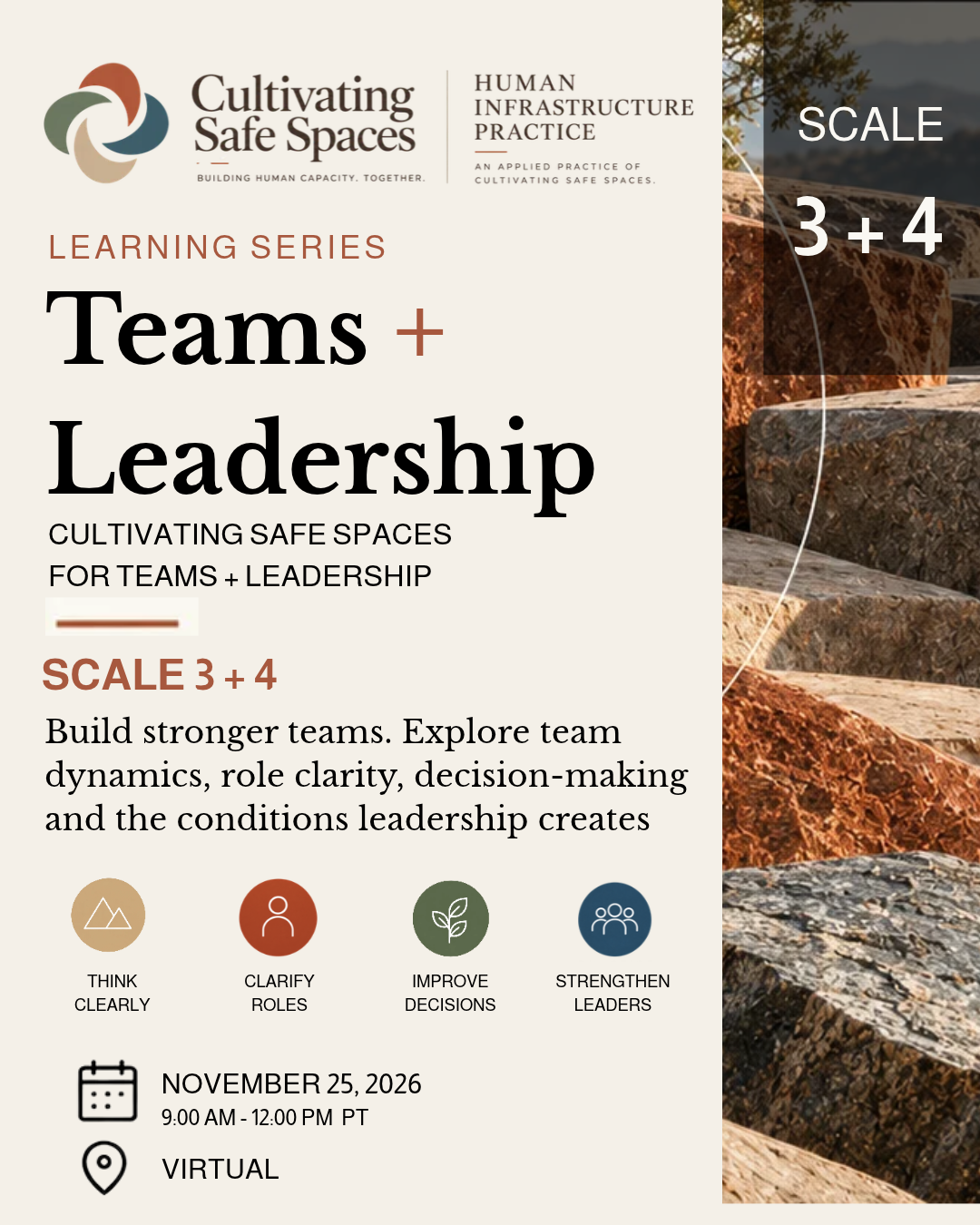
Having capable people in the room does not automatically create a capable team.
This session explores the Team and Leadership scales of Cultivating Safe Spaces. Participants will examine what teams need in order to communicate, make decisions, navigate disagreement and move work forward, while also looking at how leadership behaviour, authority and accountability shape the conditions around others.
team dynamics and different ways of working
shared purpose and role clarity
communication and productive conflict
meeting and decision-making practices
authority, responsibility and accountability
leadership under pressure
governance relationships
recognizing when a team problem may actually sit at another scale
Can we think, decide and work together?
Can leaders cultivate the conditions where people thrive?
Team members, managers, supervisors, executives, Board members, project teams, facilitators and people responsible for helping groups work and make decisions together.
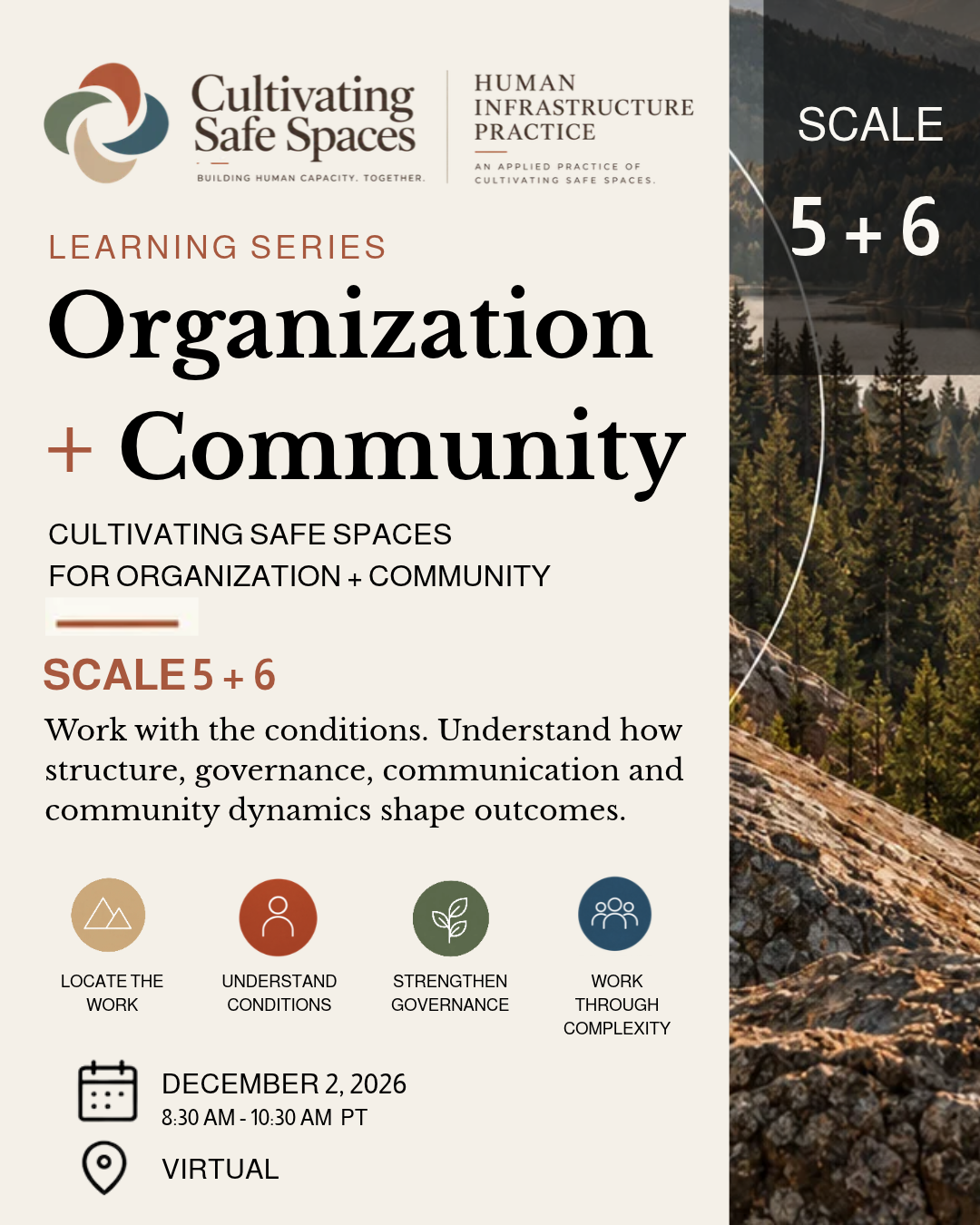
Sometimes what looks like a people problem is actually being produced by the conditions around them.
This session explores the Organization and Community scales of Cultivating Safe Spaces and introduces the connection to Human Infrastructure Practice.
Participants will examine how governance, structure, policy, roles, communication and organizational conditions shape behaviour, while also exploring the complexity of community relationships, history, leadership and collective responsibility.
how organizational conditions influence behaviour
roles, authority and responsibility
governance and decision-making
policies, communication and accountability
organizational growth and change
strategic alignment
community relationships and shared understanding
engagement and collective decision-making
locating where a challenge actually lives
the connection between CSS and Human Infrastructure Practice
What behaviours is the organization producing?
Can communities remain connected through complexity?
Executives, managers, Boards, administrators, Nation staff and leadership, organizational leaders, consultants, facilitators, planners and people responsible for organizational or community change.
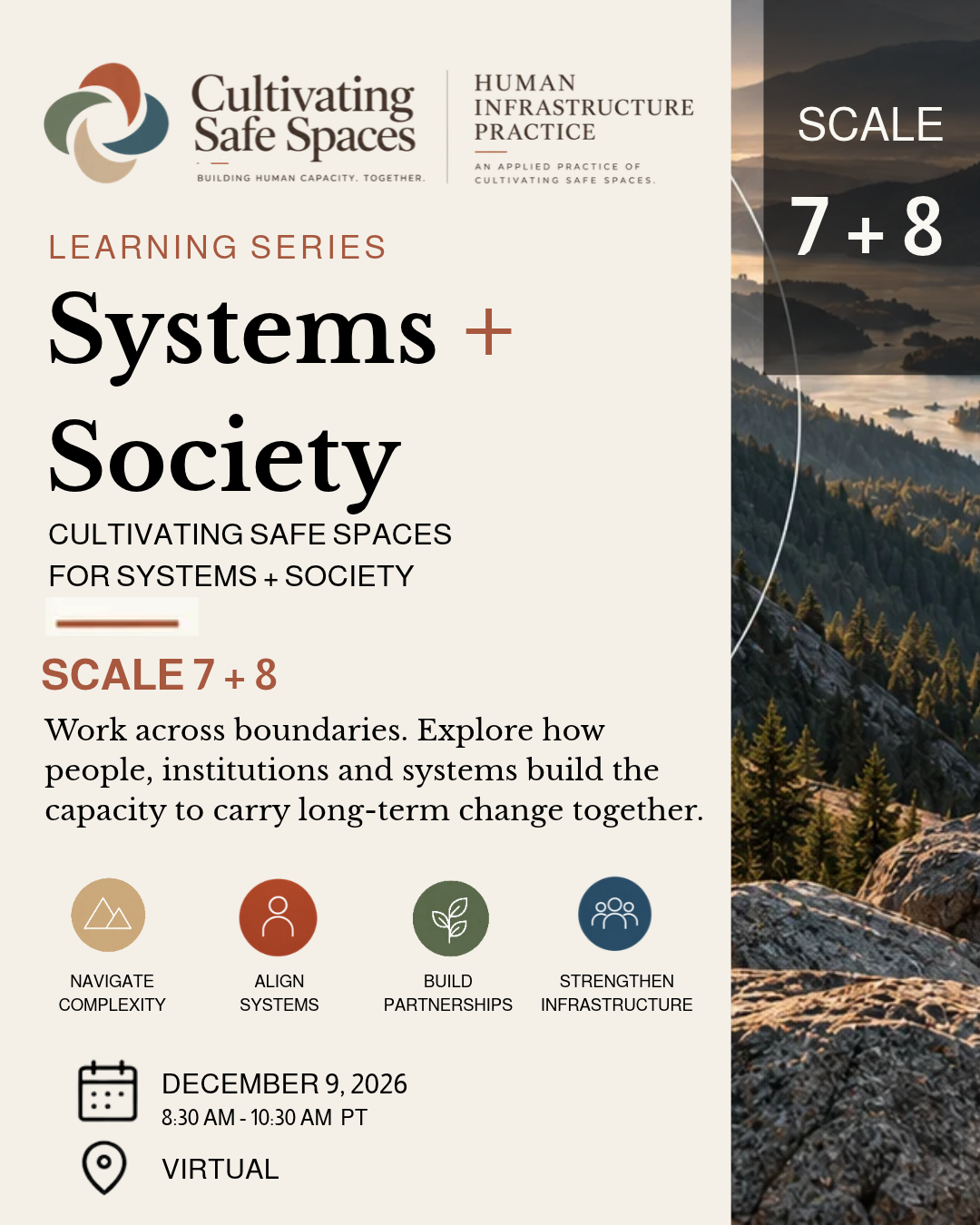
Some challenges are bigger than any one person, team, organization or community.
They may involve Indigenous Nations, governments, businesses, institutions, regulators and communities carrying different mandates, histories, authority and responsibilities.
This session explores the Systems and Society scales of Cultivating Safe Spaces and how Human Infrastructure Practice can be applied to complex partnerships, major projects, institutional relationships and long-term systems change.
working across organizational and institutional boundaries
multi-party and cross-sector collaboration
authority and decision-making across systems
governance and institutional relationships
competing mandates and responsibilities
shared strategy and systems alignment
major projects and complex partnerships
the difference between relationship problems and structural problems
the human capacity required to carry long-term change
Can multiple organizations, governments and Nations work together?
How do humans continue adapting together as complexity increases?
Senior leaders, Indigenous Nations, government, industry, major-project teams, policy leaders, systems practitioners, consultants, facilitators and people working across institutional boundaries.
No results match your search. Try removing a few filters.
